
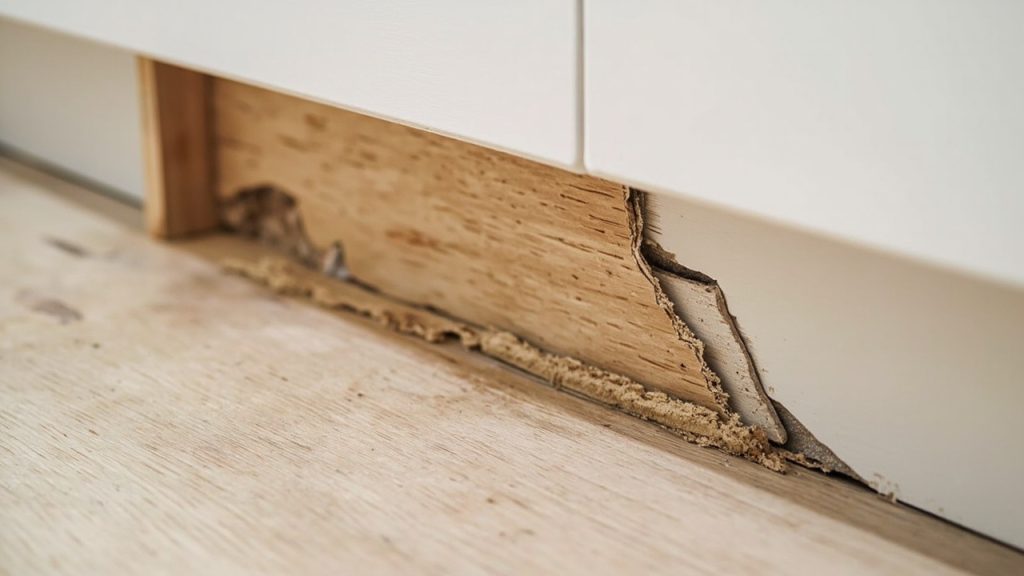
Seeing the baseboard of your kitchen island start to puff up or pull away from the floor is a frustrating discovery for any homeowner in the Richmond area. This localized swelling is rarely a cosmetic fluke. It is almost always the first visible sign of a slow, hidden plumbing failure occurring beneath your feet. In the current 2026 Houston climate, where high humidity levels often exceed 70 percent indoors during the summer months, even a tiny drip can lead to rapid structural decay and microbial growth within a matter of days.
Kitchen islands are unique because they often sit directly over a concrete slab or a crawlspace with plumbing lines that are difficult to access. Unlike wall cabinets, where you might see a leak under the sink immediately, island leaks often stay trapped under the bottom shelf or within the toe-kick area. By the time you notice the wood grain expanding or the paint cracking, the water has likely been present for weeks or even months.
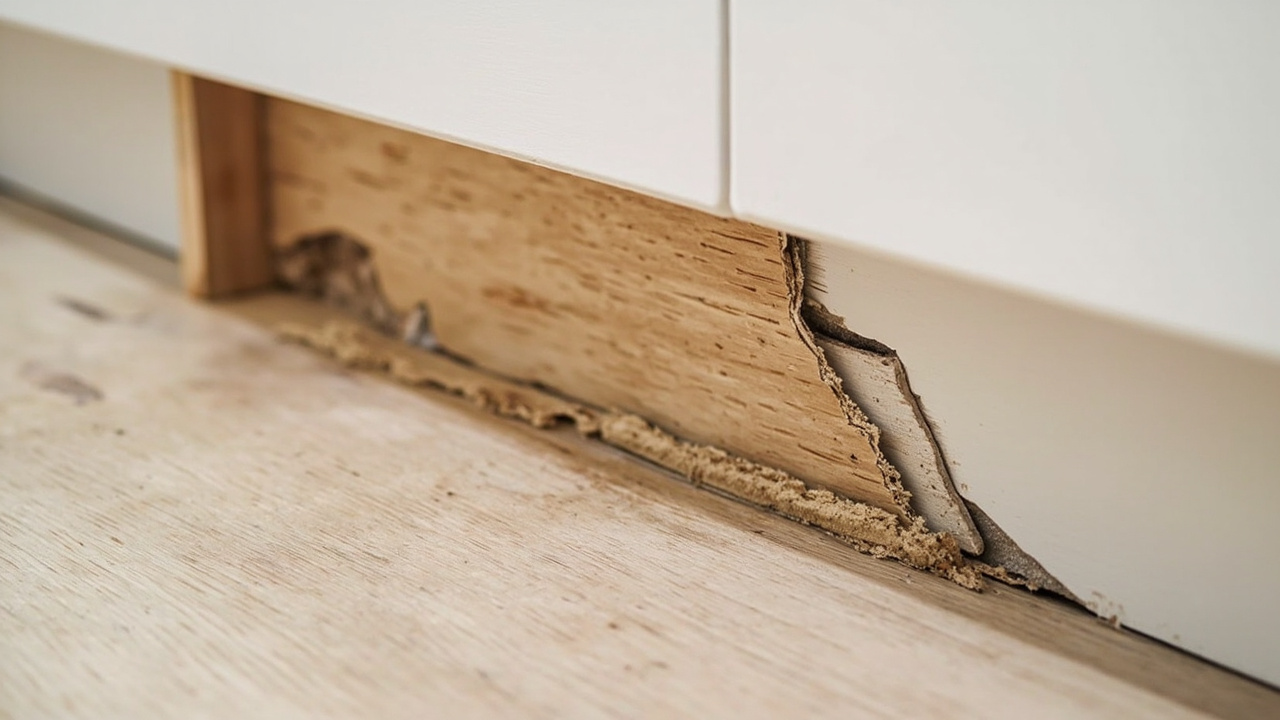
Common Causes for Island Cabinet Swelling in Houston Homes
The plumbing layout of a modern Richmond kitchen island usually includes a sink, a dishwasher, and sometimes a pull-out trash drawer with a nearby refrigerator water line. Any one of these components can develop a pinhole leak. In many newer developments across Harvest Green and Aliana, PEX piping is standard. While durable, PEX fittings can occasionally loosen due to the extreme soil expansion and contraction common in the Fort Bend County clay. This shifting can put stress on joints under the island floor.
Dishwasher discharge hoses are another frequent culprit. These hoses often run through the side of a cabinet and can develop cracks or slow leaks at the connection point. Because the dishwasher is tucked tightly into the island, the water drains straight down into the subfloor or onto the bottom plate of the cabinetry. If you are dealing with a more significant plumbing issue, you might need to consult experts on how to handle a burst pipe in Memorial or similar areas where older infrastructure often fails under pressure.
Another factor is the Houston Humidity Index. In 2026, we see more frequent extreme weather events that drive moisture into the home. When a small leak provides the moisture and the Texas heat provides the energy, the wood fibers in your cabinets begin a process called hygroscopic expansion. The wood pulls moisture from the air and the floor, causing the internal structure of the material to fail.
Understanding MDF versus Solid Wood Damage
Most modern kitchen islands in the Richmond and Katy areas are constructed using Medium Density Fiberboard or MDF. This material is made of compressed wood fibers and resin. While it is excellent for creating a smooth finish for painted cabinets, it acts like a sponge when it meets water. Once MDF absorbs moisture, the resin bonds break and the material expands. This expansion is permanent. Unlike solid wood, which may shrink back slightly once dried, MDF will remain swollen and crumbly even after the water is gone.
Solid wood cabinets, which are more common in historic neighborhoods or high-end custom builds, react differently. They tend to cup or warp. While solid wood is more resilient, it still requires professional drying to prevent the growth of wood-rotting fungi. If you live in a more established area, you might want to look into professional mold remediation for River Oaks Estates and historic homes to see how older materials are handled during a restoration project.
| Material Type | Reaction to Water | Repairability in 2026 | Replacement Necessity |
|---|---|---|---|
| MDF (Fiberboard) | Rapid swelling and delamination | Very Low | Almost Always |
| Plywood (Furniture Grade) | Layer separation and warping | Moderate | Case by Case |
| Solid Hardwood | Cupping and twisting | High if caught early | Rarely if dried fast |
| Thermofoil | Peeling and bubbling | Low | Usually Needed |
Detecting Hidden Leaks Under the Kitchen Island Floor
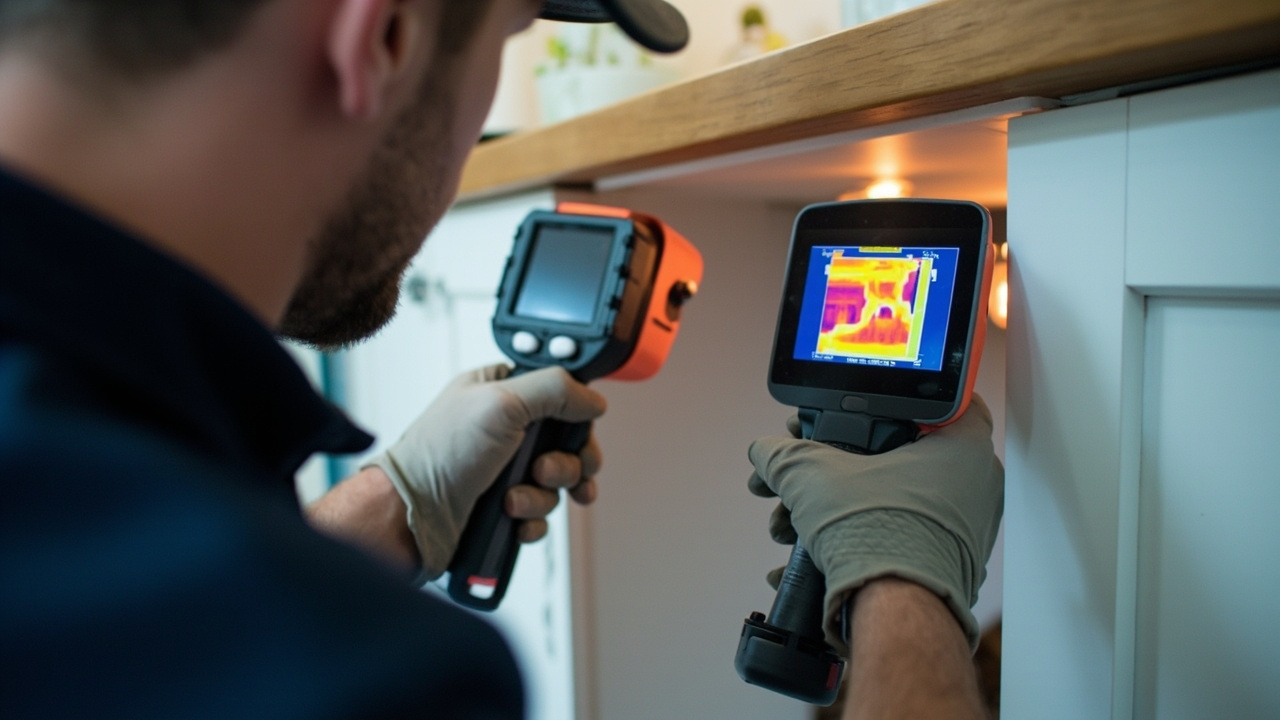
Finding the source of the water is the first priority. Professional restorers use a variety of tools to track moisture without tearing your kitchen apart. In 2026, thermal imaging has become the gold standard for this process. These cameras detect temperature differences on the surface of the cabinets and floors. Since water cooled by evaporation is usually colder than the surrounding dry materials, the leak shows up as a dark blue or purple bloom on the camera screen.
We also use moisture meters with non-invasive sensors. These allow us to check the moisture content of the subfloor beneath your tile or hardwood without drilling holes. If the moisture levels are high near the center of the island but dry near the edges, we know the leak is internal to the island plumbing and not a result of a wider flood. If the damage is part of a larger residential issue, reaching out for emergency water removal in The Heights or your specific local area is a necessary step to save the rest of your flooring.
In Richmond, many homes are built on post-tension slabs. If a pipe under the slab leaks, water can travel upward through the concrete through a process called capillary action. This is particularly common in neighborhoods with high water tables near the Brazos River. This type of leak requires specialized equipment to detect because the pipe is buried deep within the foundation.
The Risk of Mold Growth in the Dark Island Void
The space behind the toe-kick and under the base of the island is the perfect environment for mold. It is dark, warm, and, when a leak occurs, extremely damp. In the Houston area, mold spores can begin to colonize a wet surface in as little as 24 to 48 hours. The current 2026 standards for water restoration emphasize that any porous material that has been wet for more than 48 hours must be evaluated for microbial activity.
Common mold types found in Houston kitchens include Cladosporium and Penicillium. While these are common, they can still cause respiratory irritation and persistent odors that smell like old gym socks or wet earth. Because the island is where you prepare food, having a mold colony living inches away from your cutting boards is a significant health concern. If you suspect the water has spread from a sewer line or a back-up, you must act even faster, similar to how businesses handle rapid commercial sewage remediation in Downtown Houston to maintain safety codes.
Restoration Tools and Professional Drying Methods
Once the leak is repaired, the drying process begins. Simply opening the cabinet doors and pointing a desk fan at the island will not work. The moisture is trapped in the structural wood and the subfloor. Professional restorers use LGR (Low Grain Refrigerant) dehumidifiers. These machines are designed to pull massive amounts of water out of the air, creating an environment so dry that the moisture is literally pulled out of the wood fibers.
| Restoration Tool | 2026 Industry Standard Use | Benefit to Homeowner |
|---|---|---|
| LGR Dehumidifier | Removes 100+ pints of water per day | Prevents mold growth in walls |
| Axial Air Mover | High-velocity airflow across floors | Speeds up evaporation significantly |
| Hygrometer | Measures humidity and dew point | Ensures the house is truly dry |
| HEPA Air Scrubber | Filters air during mold removal | Keeps kitchen air safe to breathe |
We often use an injectidry system for island cabinets. This involves small tubes that push warm, dry air into the wall cavities or under the cabinet base. This targeted drying can sometimes save the cabinet boxes even if the exterior trim needs to be replaced. For residents in the wider metro area, finding flood damage restoration specialists in Katy is often the first step in getting this specialized equipment on-site quickly.
What to Do After Finding a Swollen Cabinet
If you notice swelling today, do not wait for it to get worse. The longer the water sits, the more likely you are to face a total kitchen remodel rather than a simple repair. Follow these steps to minimize the damage.
- Clear out all items from the cabinets under the sink and the island.
- Check the water meter to see if it is spinning while no water is running.
- Turn off the local shut-off valves for the sink and dishwasher.
- Use a dry-vac to remove any standing water you can reach.
- Call a professional to perform a moisture map of the kitchen floor.
- Contact your insurance provider to see if the leak is covered under your 2026 policy.
Most 2026 homeowner insurance policies in Texas cover sudden and accidental water damage. A slow leak that has been ignored for months might be denied, but a pipe that recently failed is typically a covered loss. Documentation is key. A professional restoration company will provide the moisture readings and thermal images your adjuster needs to process the claim according to IICRC S500 standards for professional water damage restoration.
Living in Richmond means dealing with unique environmental challenges, from the clay soil movement to the intense coastal humidity. Your kitchen island is often the centerpiece of your home. Protecting it from hidden water damage requires a quick response and the right technical expertise. If you see that tell-tale swelling on your baseboards, reach out to a local expert who understands the specific needs of Houston area properties and has the 2026 technology to fix the problem right the first time.
{
“@context”: “https://schema.org”,
“@type”: “BlogPosting”,
“headline”: “Why Your Richmond Kitchen Island Cabinets Are Swelling from a Hidden Pipe Leak and the Steps to Fix It”,
“description”: “Notice swollen kitchen cabinets in your Richmond home? Learn about hidden leaks, MDF damage, and professional restoration steps to save your Houston kitchen.”,
“wordCount”: 1541,
“datePublished”: “2026-02-16T08:18:00.000Z”,
“dateModified”: “2026-02-16T08:18:00.000Z”,
“inLanguage”: “en-US”,
“mainEntityOfPage”: {
“@type”: “WebPage”,
“@id”: “https://silverlinewaterdamagerestorationhouston.com”
},
“publisher”: {
“@type”: “LocalBusiness”,
“name”: “Silverline Water Damage Restoration Houston”,
“url”: “https://silverlinewaterdamagerestorationhouston.com”
},
“author”: {
“@type”: “Organization”,
“name”: “Silverline Water Damage Restoration Houston”,
“url”: “https://silverlinewaterdamagerestorationhouston.com”
},
“image”: {
“@type”: “ImageObject”,
“url”: “https://silverlinewaterdamagerestorationhouston.com/wp-content/uploads/2026/03/why-your-richmond-kitchen-island-cabinets-are-swel-1.jpg”
}
}
{
“@context”: “https://schema.org”,
“@type”: “LocalBusiness”,
“name”: “Silverline Water Damage Restoration Houston”,
“url”: “https://silverlinewaterdamagerestorationhouston.com”,
“address”: {
“@type”: “PostalAddress”,
“addressLocality”: “Houston”
},
“areaServed”: {
“@type”: “City”,
“name”: “Houston”
}
}
{
“@context”: “https://schema.org”,
“@type”: “BreadcrumbList”,
“itemListElement”: [
{
“@type”: “ListItem”,
“position”: 1,
“name”: “Home”,
“item”: “https://silverlinewaterdamagerestorationhouston.com”
},
{
“@type”: “ListItem”,
“position”: 2,
“name”: “Blog”,
“item”: “https://silverlinewaterdamagerestorationhouston.com/blog”
},
{
“@type”: “ListItem”,
“position”: 3,
“name”: “Why Your Richmond Kitchen Island Cabinets Are Swelling from a Hidden Pipe Leak and the Steps to Fix It”
}
]
}
{
“@context”: “https://schema.org”,
“@type”: “Service”,
“serviceType”: “Water Damage Restoration”,
“provider”: {
“@type”: “LocalBusiness”,
“name”: “Silverline Water Damage Restoration Houston”,
“url”: “https://silverlinewaterdamagerestorationhouston.com”
},
“areaServed”: {
“@type”: “City”,
“name”: “Houston”
},
“description”: “Notice swollen kitchen cabinets in your Richmond home? Learn about hidden leaks, MDF damage, and professional restoration steps to save your Houston kitchen.”
}