

Mold in New Construction Guide for Houston Homeowners
Finding mold in a home that still smells like fresh paint is a frustrating experience for many residents in Sunnyside. You expect a new build to be a clean slate, free from the structural headaches of older properties. In the current 2026 Houston real estate market, rapid construction often leads to overlooked moisture issues. If a pipe leaked before you moved in or during the final stages of the build, the risk of fungal growth is high. Houston climate conditions make this problem worse because our local humidity levels rarely drop below 60 percent. When moisture gets trapped inside the walls of a high-efficiency home, it has nowhere to go. This creates a perfect environment for mold to thrive behind your new drywall.
Sunnyside is seeing a significant revitalization with many new residential projects near the Scott Street corridor. These homes are built with modern energy codes that prioritize airtight seals. While this is great for your cooling bills, it is dangerous when a construction leak occurs. If water enters the wall cavity and is not dried within 24 to 48 hours, mold colonies begin to form. You might not see them on the surface for weeks or even months. By the time a dark spot appears on the baseboard, the interior of the wall is often heavily contaminated. You need to act fast to protect the structural integrity of your property and your family health.
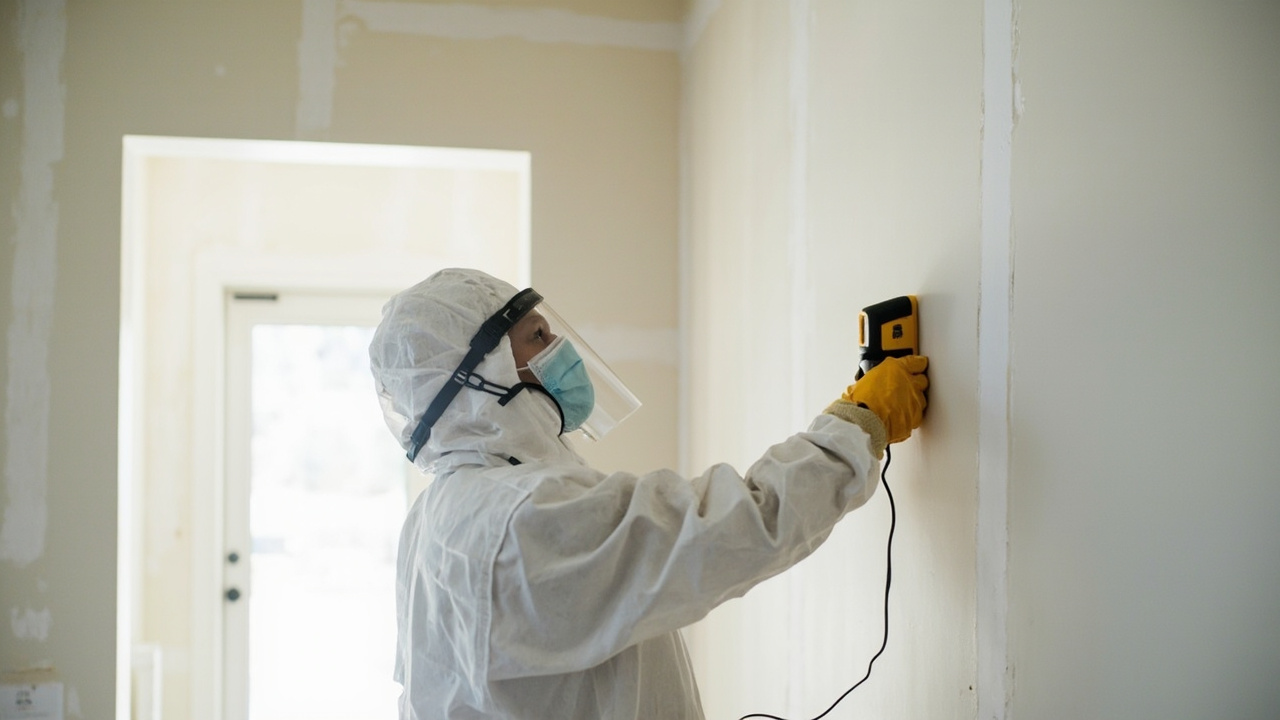
Why Modern Houston Homes Trap Moisture
Building science has changed significantly by 2026. Modern homes use advanced house wraps and radiant barriers to keep the heat out. These materials create a tight building envelope. In a traditional older home, air leaks helped dry out minor moisture. In a new Sunnyside build, that air exchange is controlled strictly by the HVAC system. If a plumber makes a mistake or a roof flashing is installed incorrectly during construction, the trapped water stays liquid for a long time. The wood studs and floor joists absorb this water. Because the home is sealed so well, the evaporation process is incredibly slow.
We also see issues with green lumber. This refers to wood that still has a high moisture content when it is used for framing. In the rush to complete new neighborhoods in South Park and Sunnyside, builders sometimes use lumber that has not been properly seasoned or dried. When this wet wood is covered with insulation and drywall, the moisture is locked in. As the house settles and the HVAC system starts running, that moisture tries to escape and feeds mold spores that are naturally present in the air. This results in mold growth on the hidden side of the sheetrock.
The Risks of Stachybotrys in New Builds
Many homeowners worry about black mold, specifically Stachybotrys chartarum. This type of mold loves the paper backing on modern drywall. It requires a constant moisture source to grow, which is exactly what a slow construction leak provides. Exposure to these spores can cause respiratory issues, headaches, and fatigue. In a brand-new home, these symptoms are often dismissed as seasonal allergies or the smell of new carpet. If you notice a persistent musty odor in a specific room, do not ignore it. The smell is a chemical byproduct of mold metabolism.
For residents in areas like the Sunnyside Gardens neighborhood, the proximity to Sims Bayou can lead to higher groundwater levels. This adds pressure to the foundation and can cause moisture to wring out of the concrete slab into the wall plates. If your builder did not use a proper vapor barrier under the slab, you might face ongoing humidity issues that traditional air conditioning cannot solve. You may need a dedicated whole-house dehumidifier to maintain the 30 to 50 percent relative humidity range recommended for Houston homes.
Understanding Texas Mold Regulations and TMARR
Texas has some of the strictest mold regulations in the United States. The Texas Department of Licensing and Regulation (TDLR) oversees the Texas Mold Assessment and Remediation Rules, commonly known as TMARR. These rules are designed to protect you from shoddy work and conflicts of interest. In Texas, the same company cannot perform both the mold assessment and the mold remediation on the same project. This ensures that the person checking for mold does not have a financial incentive to find more of it, and the person cleaning it up is held accountable by an independent third party.
When you find mold in your new build, you first hire a Mold Assessment Consultant (MAC). They will perform moisture mapping and take air samples. If they find a significant amount of mold, they write a protocol. This protocol is a step-by-step instruction manual for the remediation company. Once the cleanup is done, the consultant returns to perform a clearance test. If the home passes, you receive a Certificate of Mold Remediation (CMR). This document is vital for your home’s history. It proves to future buyers that the mold was handled correctly according to state law.
| Material Type | Dry Standard Percentage | At-Risk Percentage | Action Required |
|---|---|---|---|
| Kiln-Dried Framing Lumber | 9 to 12 percent | 16 to 19 percent | Active structural drying |
| Drywall (Sheetrock) | 0.5 to 1.0 percent | Above 1.5 percent | Removal and replacement |
| Concrete Slab (Surface) | Under 4 percent | Above 5 percent | Apply vapor barrier |
| Plywood Subfloor | 10 to 13 percent | Above 15 percent | Dehumidification |

Managing Builder Liability and Warranties
Most new homes in Houston come with a 1-2-10 year warranty. The first year covers almost everything, including workmanship and materials. If you find mold caused by a construction leak within the first 12 months, the builder is usually responsible for the cost of remediation. However, you must document everything. Take photos of the mold, the source of the leak, and any damaged belongings. Do not let the builder simply bleach the wall and paint over it. Bleach does not kill mold on porous materials like drywall. It only changes the color while the roots remain alive inside the gypsum.
If the leak was caused by a faulty appliance or a plumbing failure, you might also need to look at the second year of the warranty, which covers mechanical systems. Dealing with these claims can be difficult. Builders often try to claim that the mold is a maintenance issue caused by the homeowner. This is why having a professional moisture report is essential. It provides the evidence needed to prove the moisture came from a structural or mechanical defect. If you are struggling with a complex claim, you might look at how others handle rapid commercial sewage remediation in downtown Houston to understand the documentation standards required for high-stakes insurance and liability work.
Professional Remediation Steps for Sunnyside Homes
If the mold covers more than 25 contiguous square feet, Texas law requires a licensed remediation team. Even for smaller areas, the process should be rigorous. First, the team sets up containment using heavy-duty plastic sheeting. This prevents spores from spreading to the rest of the house through the HVAC system. They use HEPA air scrubbers to create negative air pressure. This pulls the air through a high-efficiency filter, cleaning it before it leaves the work area.
Next, the contaminated materials are removed. In a new build, this often means cutting out sections of drywall and removing wet insulation. The remaining wall studs are cleaned using HEPA vacuums and treated with an EPA-approved antimicrobial solution. The team then uses industrial dehumidifiers to bring the moisture content of the wood back down to safe levels. Only after the area is dry and has passed a third-party clearance test should the walls be closed back up. This process ensures the mold will not return. It is a much more intensive process than what you might see with a burst pipe in Memorial where the water is often clean and the focus is primarily on fast drying.
| Phase of Process | Duration | Key Activity |
|---|---|---|
| Inspection and Testing | 24 to 48 hours | Air sampling and moisture mapping |
| Containment Setup | 4 to 6 hours | Plastic barriers and air scrubbers |
| Demolition and Cleaning | 1 to 2 days | Removing drywall and HEPA vacuuming |
| Structural Drying | 2 to 4 days | Reducing moisture in framing lumber |
| Clearance Testing | 24 to 72 hours | Independent lab analysis of air quality |
Maintaining Air Quality in Your New Sunnyside Home
Once the mold is gone, you must maintain the home to prevent a recurrence. Houston weather is relentless. You should monitor your indoor humidity levels daily. Most modern thermostats have a built-in hygrometer. If your indoor humidity consistently stays above 55 percent, your air conditioner may be oversized. This is a common problem in new construction. An oversized AC unit cools the air quickly but shuts off before it can remove the moisture. This leaves the air cold and clammy, which promotes mold growth.
Check your attic and crawlspaces regularly. In Sunnyside, the heavy clay soil can cause new foundations to shift slightly in the first few years. This shifting can create small gaps in window seals or door frames where humid air can leak in. Keep your gutters clean to ensure water moves away from the foundation. If you see water pooling near your walls after a heavy Houston downpour, you may need to improve your landscaping drainage. Preventing water from sitting near the house is the best way to keep the interior dry.
- Install a smart leak detection system on your main water line.
- Use exhaust fans in bathrooms and kitchens every time you cook or shower.
- Change your HVAC filters every 30 to 90 days to maintain proper airflow.
- Keep furniture a few inches away from exterior walls to allow for air circulation.
- Check the condensate drain line for your AC unit twice a year.
If you have recently moved into a new home in Sunnyside or are planning to build in the area, stay vigilant. Mold does not care how much your home cost or how new it is. It only cares about moisture. If you suspect a leak occurred during the building process, get a professional assessment immediately. Early intervention is the difference between a simple cleaning and a massive renovation. For those in nearby areas, the challenges are similar, such as finding reliable flood damage restoration specialists in Katy and West Houston who understand the local drainage issues. Every neighborhood has its specific risks, but the physics of mold remains the same.
If you are currently facing a water crisis, remember that speed is your best friend. Whether you need emergency water removal in The Heights or are dealing with a slow leak in a Sunnyside new build, the goal is to stop the water and start the drying. New homes are an investment in your future. Do not let a construction mistake turn that investment into a health hazard. While the approach differs from professional mold remediation for River Oaks estates due to the materials used, the necessity for a licensed, professional touch is universal in Houston. Protect your home by following the state guidelines and insisting on proper drying protocols from your builder.
Contact a local expert if you find damp spots or smell musty odors in your new property. Taking action today ensures your Sunnyside home remains the safe, clean environment you were promised when you signed the closing papers. Dealing with mold is a stressful experience, but with the right professional help and a clear understanding of your rights under Texas law, you can restore your home to its original condition.