
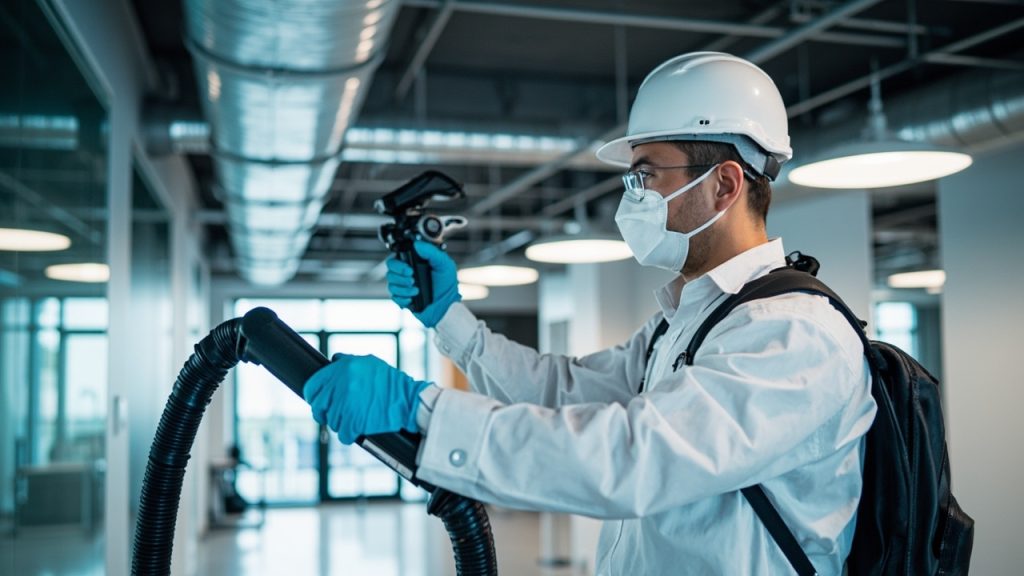
Professional Mold in Air Ducts Removal and Remediation in Houston TX
Office managers in the Energy Corridor face a constant struggle with indoor air quality. The geographic location of West Houston makes commercial buildings particularly vulnerable to microbial growth. Proximity to the Buffalo Bayou and Terry Hershey Park means the local humidity levels frequently exceed 75 percent during the summer months of 2026. When these high moisture levels meet the cooling systems of large office complexes along I-10 or Eldridge Parkway, the result is often mold in air ducts. If your staff reports a heavy or musty scent when the blower kicks on, you are likely dealing with an active colony of spores circulating through the ventilation system.
As a property owner or manager, ignoring these smells leads to decreased productivity and potential health complications for your tenants. The Energy Corridor features many glass curtain wall buildings that trap heat and create significant temperature differentials. These differentials lead to condensation inside the plenum spaces and supply ducts. Once moisture accumulates on dust or organic debris within the ductwork, mold begins to colonize. Unlike residential systems, commercial HVAC units in Houston operate under immense pressure to maintain comfort, which can inadvertently push spores across multiple floors in a matter of hours.
Signs of Microbial Growth in Your Commercial HVAC System
Identifying the presence of mold in air ducts requires a keen eye and a sensitive nose. The first indicator is usually a pungent odor often described as dirty socks or wet earth. This scent is caused by microbial volatile organic compounds or mVOCs. These are gases released by mold as it grows and consumes organic material. In an office setting, these smells are often strongest on Monday mornings after the HVAC system has been scaled back over the weekend to save energy. This period of reduced airflow allows moisture to settle and spores to proliferate without disturbance.
Visible cues are also common around supply vents. You might notice dark spotting or fuzzy growth on the metal louvers or the ceiling tiles immediately surrounding the vent. This is not just dust. In the high humidity of Houston, dust clumps together and provides a food source for fungal species. If you see persistent spotting in your office suite, it is time to consult an expert. For those managing properties near the Barker Reservoir or across the 77077 and 77079 zip codes, rapid response is vital to prevent the contamination from reaching the main air handling unit. If your facility has recently experienced water issues, you should seek emergency water removal to stop the moisture source before mold takes hold.
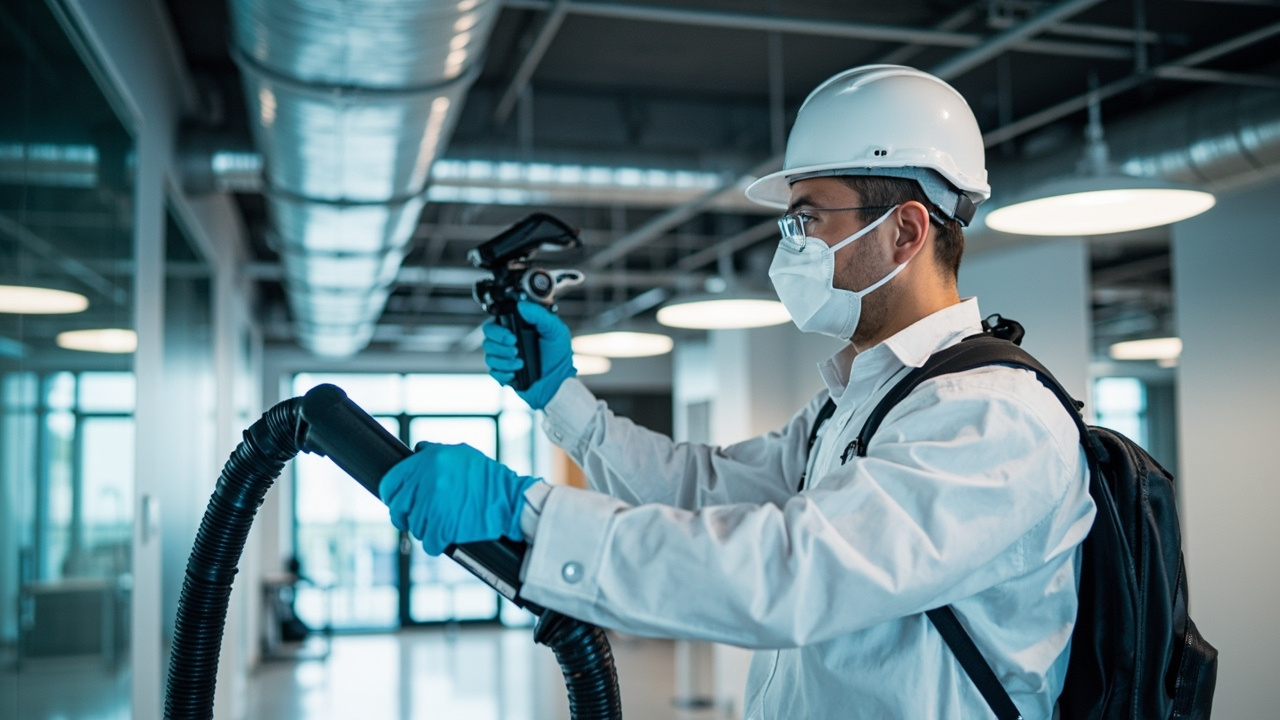
Health Risks Associated with Airborne Mold Spores in Office Environments
Air quality is a significant concern for human resources and facilities departments in 2026. When an AC system blows mold spores into the air, it creates a bioaerosol environment. Employees with asthma or seasonal allergies often experience exacerbated symptoms while at their desks. Common complaints include itchy eyes, persistent coughing, and headaches that seem to disappear once they leave the building. This phenomenon is often linked to the presence of mycotoxins which are toxic substances produced by certain types of fungi like Stachybotrys or Aspergillus.
The Environmental Protection Agency provides extensive data on how indoor air pollutants impact office worker health. In Houston, the risk is compounded by the variety of mold species that thrive in our sub tropical climate. When mold is found in the main trunk lines of an office building, it is no longer a localized issue. It becomes a building wide liability. Addressing these concerns through professional remediation ensures that the workspace remains compliant with current health standards and maintains a safe environment for all occupants.
How Houston Humidity Levels Impact Energy Corridor Office Buildings
The Energy Corridor sits in a unique topographical position that encourages high dew points. Current 2026 weather patterns show that West Houston stays warmer and more humid than the coastal areas due to the urban heat island effect combined with inland moisture traps. When the outdoor humidity is 80 percent and the indoor temperature is set to 70 degrees, the metal surfaces of the HVAC system act as a magnet for condensation. If the insulation on the outside of the ducts is compromised or if there are leaks in the seals, moisture will form rapidly.
Buildings located in the Memorial area or near the Addicks Reservoir must deal with higher ground moisture levels which seep into the building envelope. If a pipe fails in one of these commercial structures, the resulting humidity spike can trigger mold growth in the ductwork within 48 hours. If you find yourself in this situation, knowing how to handle a burst pipe in Memorial can save your HVAC system from total contamination. The interaction between the building envelope and the mechanical system is the primary reason why simple cleaning is rarely enough to solve a mold problem in Houston.
Understanding the Difference Between Common Houston Mold Types
Not all mold found in ductwork is the same. Some species are merely an aesthetic nuisance while others require specialized containment and removal protocols. In 2026, the Texas Department of Licensing and Regulation or TDLR maintains strict rules regarding how these different species must be handled in commercial settings. Below is a comparison of common mold types found in Houston office buildings.
| Mold Species | Common Appearance | Typical Location | Risk Level |
|---|---|---|---|
| Cladosporium | Green or black olive colored suede | Cooler surfaces and moist vents | Moderate allergen |
| Aspergillus | White or yellow powdery patches | Insulation and drywall liners | High respiratory risk |
| Stachybotrys | Slimy black or dark green soot | Persistent leaks and wet wood | High toxic potential |
| Penicillium | Blue or green velvet texture | Damaged duct board and carpet | Moderate allergen |
Our Step by Step Mold Remediation Process for Commercial Ductwork
Remediation is a technical process that goes far beyond a standard duct cleaning. In Houston, professional contractors must follow the IICRC S520 standard for the removal of microbial growth. We begin by establishing negative air pressure. This ensures that when we agitate the ductwork, no spores escape into the occupied office space. We use commercial grade HEPA filtration units that capture 99.97 percent of particles down to 0.3 microns. This is essential for protecting the health of your tenants during the work.
- Initial assessment and moisture mapping to find the root cause of the growth.
- Establishing containment zones using heavy duty plastic sheeting and air locks.
- Setting up negative air machines to prevent cross contamination.
- Removing porous materials like internally lined duct board that cannot be cleaned.
- HEPA vacuuming all interior surfaces of the metal trunk lines.
- Applying EPA registered antimicrobial coatings to encapsulate any remaining particles.
- Third party clearance testing to verify the air quality meets safety standards.
This rigorous approach is necessary because mold in air ducts can hide in the crevices of turning vanes and dampers. For managers of older properties, we apply the same precision as we do for professional mold remediation for River Oaks estates where preservation and air quality are equally critical. We ensure that every inch of the system is treated according to current 2026 industry best practices.

The Role of Licensing and Compliance in Texas Mold Removal
Texas has some of the most stringent mold laws in the United States. In 2026, any commercial project over 25 contiguous square feet requires a licensed Mold Assessment Consultant and a licensed Mold Remediation Contractor. These two roles must be filled by different companies to prevent a conflict of interest. This law protects property owners from unethical practices and ensures that the remediation is effective. Choosing a company that understands these regulations is critical for your liability protection.
In the Energy Corridor, where many offices house global headquarters for energy firms, maintaining a clear paper trail of compliance is non negotiable. We provide detailed documentation including the remediation plan and the final certificate of mold remediation. If your property has faced unique challenges like rapid commercial sewage remediation in Downtown Houston, you know that professional documentation is the only way to satisfy insurance adjusters and health inspectors. We bring that same level of detail to every HVAC mold project.
Comparing Professional Remediation and Standard Duct Cleaning
Many property managers mistake a cheap duct cleaning service for mold remediation. While cleaning removes dust, it does not address the biological root of the problem. If the fungal colonies are not properly neutralized and the moisture source is not fixed, the mold will return within weeks. Professional remediation addresses the entire ecology of the HVAC system.
| Feature | Standard Duct Cleaning | Professional Mold Remediation |
|---|---|---|
| Equipment | Basic vacuum and brushes | HEPA filtered negative air units |
| Containment | None or minimal | Physical barriers and air locks |
| Chemicals | Deodorizers | EPA registered fungicides |
| Certification | Not required | TDLR State Licensed |
| Testing | Visual only | Independent lab analysis |
| Timeline | Hours | Days depending on scope |
The difference in cost reflects the difference in depth. Remediation is a surgical process designed to restore the air quality to a pre loss condition. For businesses in West Houston, particularly those finding reliable flood damage restoration specialists in Katy, it is clear that specialized knowledge is worth the investment to avoid recurring issues.

Strategies to Prevent Future Mold Growth in West Houston Offices
Once the remediation is complete, the focus must shift to prevention. The goal is to manage the dew point inside the building. We recommend installing high efficiency pleated filters with a MERV rating of at least 13. These filters are thick enough to catch spores before they enter the supply side of the system. Additionally, the building automation system should be programmed to keep the relative humidity below 60 percent at all times, even during unoccupied hours.
Regular inspections of the condensate drain lines are also vital. In Houston, these lines often clog with algae and sludge, causing water to back up into the air handling unit. Installing UV lights inside the coil cabinet can also help by killing any organic matter that attempts to grow on the wet surfaces of the cooling coils. These proactive steps, combined with keeping the building envelope tight, will ensure that your Energy Corridor office remains a healthy place to work throughout 2026 and beyond. If you suspect your HVAC system is compromised, contact a professional to begin the assessment process immediately.
{
“@context”: “https://schema.org”,
“@type”: “BlogPosting”,
“headline”: “Why Energy Corridor Office Air Conditioning Systems Often Spread Mold Spores”,
“description”: “Learn how Houston humidity causes mold in air ducts within Energy Corridor offices and how professional remediation protects your commercial property in 2026.”,
“wordCount”: 1713,
“datePublished”: “2026-03-29T08:33:00.000Z”,
“dateModified”: “2026-03-29T08:33:00.000Z”,
“inLanguage”: “en-US”,
“mainEntityOfPage”: {
“@type”: “WebPage”,
“@id”: “https://silverlinewaterdamagerestorationhouston.com”
},
“publisher”: {
“@type”: “LocalBusiness”,
“name”: “Silverline Water Damage Restoration Houston”,
“url”: “https://silverlinewaterdamagerestorationhouston.com”
},
“author”: {
“@type”: “Organization”,
“name”: “Silverline Water Damage Restoration Houston”,
“url”: “https://silverlinewaterdamagerestorationhouston.com”
},
“image”: {
“@type”: “ImageObject”,
“url”: “https://silverlinewaterdamagerestorationhouston.com/wp-content/uploads/2026/03/is-your-energy-corridor-office-ac-blowing-mold-spo-1.jpg”
}
}
{
“@context”: “https://schema.org”,
“@type”: “LocalBusiness”,
“name”: “Silverline Water Damage Restoration Houston”,
“url”: “https://silverlinewaterdamagerestorationhouston.com”,
“address”: {
“@type”: “PostalAddress”,
“addressLocality”: “Houston”
},
“areaServed”: {
“@type”: “City”,
“name”: “Houston”
}
}
{
“@context”: “https://schema.org”,
“@type”: “BreadcrumbList”,
“itemListElement”: [
{
“@type”: “ListItem”,
“position”: 1,
“name”: “Home”,
“item”: “https://silverlinewaterdamagerestorationhouston.com”
},
{
“@type”: “ListItem”,
“position”: 2,
“name”: “Blog”,
“item”: “https://silverlinewaterdamagerestorationhouston.com/blog”
},
{
“@type”: “ListItem”,
“position”: 3,
“name”: “Why Energy Corridor Office Air Conditioning Systems Often Spread Mold Spores”
}
]
}
{
“@context”: “https://schema.org”,
“@type”: “Service”,
“serviceType”: “Water Damage Restoration”,
“provider”: {
“@type”: “LocalBusiness”,
“name”: “Silverline Water Damage Restoration Houston”,
“url”: “https://silverlinewaterdamagerestorationhouston.com”
},
“areaServed”: {
“@type”: “City”,
“name”: “Houston”
},
“description”: “Learn how Houston humidity causes mold in air ducts within Energy Corridor offices and how professional remediation protects your commercial property in 2026.”
}