




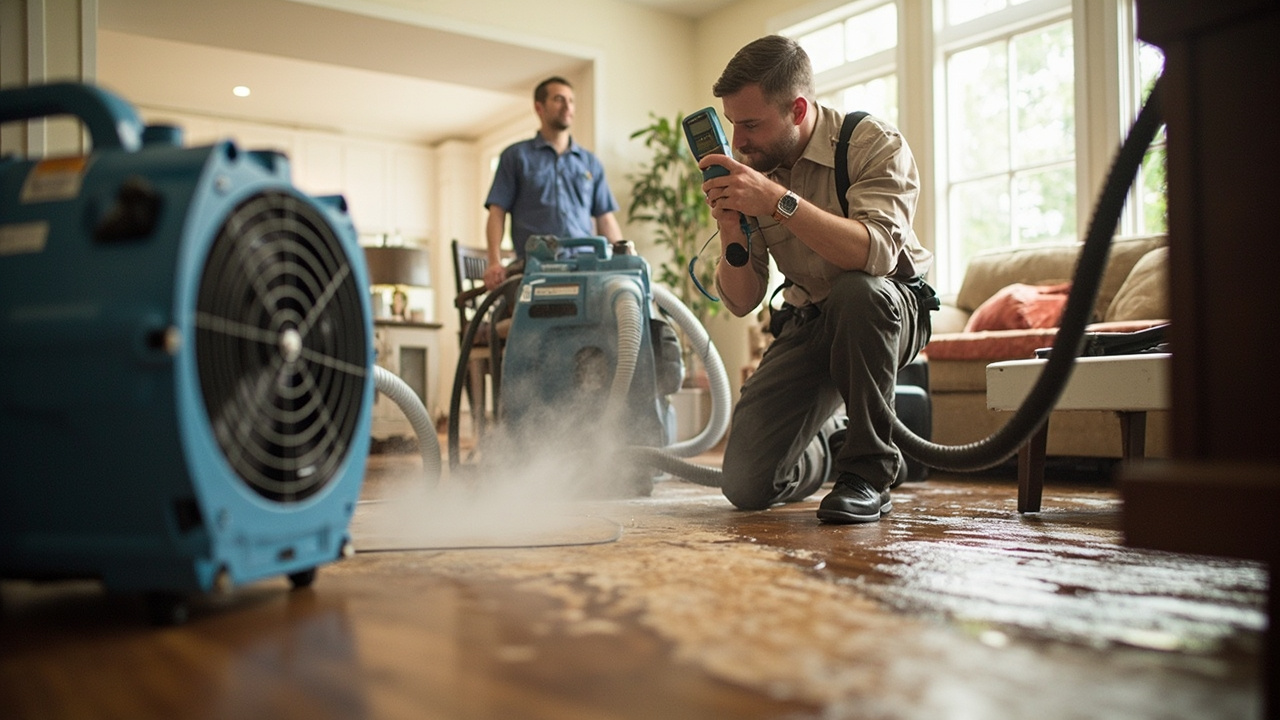
Houston's average relative humidity stays above 70 percent year-round, peaking at 90 percent during summer mornings. This saturated air slows evaporation rates dramatically compared to arid climates. Water molecules cannot escape wet materials when the surrounding air is already holding maximum moisture. This extends structural drying duration by days or weeks depending on material density. Older homes in neighborhoods like Montrose, the Heights, and Rice Village often have plaster walls, pier-and-beam foundations, and minimal vapor barriers. These construction methods trap moisture in hidden spaces. The water restoration drying timeline for a 1940s bungalow differs significantly from a 2020s build in Katy with modern moisture barriers and HVAC systems designed for humidity control.
Local restoration professionals understand these variables because we work in them daily. We know that Houston's clay soil expands and contracts with moisture changes, creating foundation movement that can crack slabs and allow groundwater infiltration. We know that tropical storms and heavy rain events saturate the ground beneath structures, introducing moisture from below even after interior water is extracted. We adjust our time to dry out water damage estimates based on these local realities. A drying process length calculated for Phoenix or Denver fails in Houston. Choosing a local team means choosing expertise built on thousands of Houston-specific jobs, not generic training manuals.